Thanks
to Quartz’s Zach Seward for jogging my
memory about this oldie and goodie: Tumblr’s David Karp in a
video interview taped in 2007, when he was 21, had 75,000 users and was talking
about stuff like Digg, Flickr … and Twitter.
Karp’s interviewer is Howard Lindzon, who’s now known as the guy
behind StockTwits. Assuming that
the interview was taped close to the time it was published, it would have meant
that the two men were talking as Karp was raising
his first funding round of $750,000, led by Union Square Ventures
and Spark Capital.
'Air stewardess' billionaire loses bet to AirAsia chief
Sir Richard Branson lost a friendly bet to AirAsia Group Chief Executive
Officer Tony Fernandez after wagering on which of their Formula One
racing teams would finish ahead of each other in their debut season of
the 2010 Formula One Grand Prix in Abu Dhabi and that the loser would
serve as a female flight attendant on board the winner's airline.
PERTH, AUSTRALIA - MAY 12: Sir
Richard Branson serves drinks prior to his flight to Kuala Lumpur at
Perth International Airport on May 12, 2013 in Perth, Australia. Sir
Richard Branson lost a friendly bet to AirAsia Group Chief Executive
Officer Tony Fernandez after wagering on which of their Formula One
racing teams would finish ahead of each other in their debut season of
the 2010 Formula One Grand Prix in Abu Dhabi and that the loser would
serve as a female flight attendant on board the winner's airline.
(Photo by Paul Kane/Getty Images)
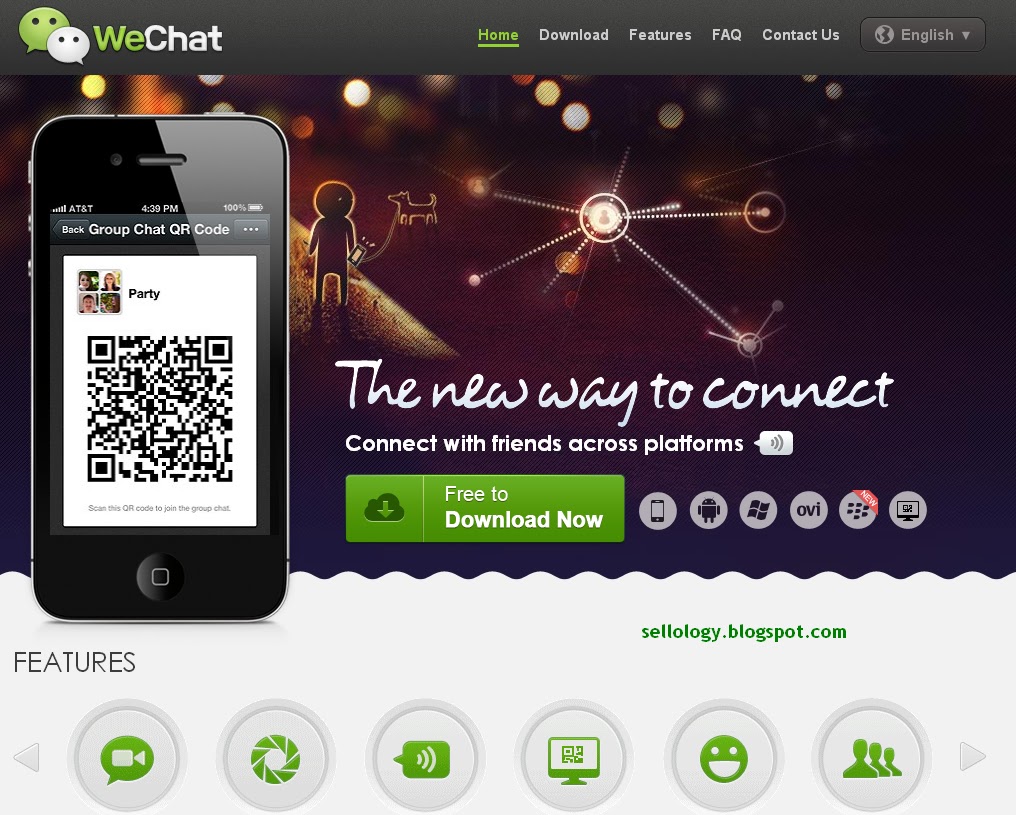
WeChat is censoring words deemed taboo by the Chinese government—and not just in China, but for users everywhere. To say that this is a problem for Tencent, WeChat’s owner and China’s biggest internet company
was supposed to be the first Chinese internet service to become a global phenomenon—the Facebook of China, and just as internationally successful. But now it appears that
, would be an understatement. Tencent recently announced that WeChat had surpassed 300 million users, many of them outside of China. (Facebook passed the 1 billion mark in October.)
As well as Chinese, the service is available in English, Indonesian, Portuguese, Thai, Vietnamese and Russian. WeChat’s app runs on all the major smartphone operating systems, including Nokia’s Symbian, which is popular in emerging markets. Words censored globally for WeChat users include the Chinese name of a newspaper currently battling the Chinese government over censorship.
The paper’s English name, Southern Weekend, is not blocked on the app. Here’s where things get difficult for WeChat: Its international users cannot now escape the fact that, as a service with its headquarters and servers in China, it is subject to the censorious whims of the Chinese government. But not only that: Because WeChat reveals the location of messages sent via the service, dissidents in China are now afraid that China’s security services are using WeChat to locate them in real time.
In October, members of Taiwan’s Democratic Progressive Party greeted the launch of WeChat in Taiwan with accusations that the service is a national security risk, saying that “hackers” (among whom they evidently meant to include the Chinese government) could break into users’ communications, including those of members of the Taiwanese military.
The potential for states to spy on people through social media is obvious—wouldn’t the CIA like to have access to Facebook’s complete database, for example—but WeChat’s international self-censorship makes those fears seem all the more real. For now, users of WeChat inside and outside of China could get around censorship by referring to sensitive subjects in languages other than Chinese.
But how long will that last? Whatever happens next, Tencent now has a problem that makes Facebook’s occasional privacy snarl-ups look tepid by comparison. It remains to be seen whether this will affect the service’s growth outside of China, but clearly, it’s going to be a stumbling-block for all Chinese web companies with ambitions that go beyond the mainland.
Pony Ma, one of the Core Founders, Executive Director, Chairman of the Board and Chief Executive Officer of Tencent. Pony oversees the strategic development, overall direction and business management of the Group. Before he founded Tencent in 1998,Pony was in charge of research and development for Internet paging system development at China Motion Telecom Development Limited, a telecommunications services and products provider in China. Pony received his Bachelor of Science Degree in Computer Science from Shenzhen University in 1993 and he has more than 18 years of experience in telecommunication and Internet industries.
Top ten hot trending gadgets of 2013 - and not an Apple in sight
Google Glass in top ten
Looking into the future? Google Glass
Apple has been excluded from a list of the top 10 gadgets for 2013.
The Hot 100 list highlights gadgets rated the most wanted in the world by tech magazine T3,.
Apple - which has previously topped the list on three separate occasions – fails to make the top 10 for the first time since 2009. Its highest-ranking product is the iPad mini in 15th place.
3D printers top the list for their “life-changing potential” with food printing already taking place and clothes, drugs and even mobile phones expected to be printable in the next 10 years.
Samsung leads the way for smartphones, with the Samsung Galaxy S4 coming in at number two. T3 experts are predicting it to be the top selling Android device for 2013.
This year’s list also sees a number of projects from Kickstarter - the world’s largest funding platform for creative ideas - getting recognition. Most famously, the Pebble digital watch comes in at number eight.
2013 is shaping up to be a big year for gaming, with the Sony PlayStation 4 coming in at number three and a raft of gaming products featured in the Hot 100.
Luke Peters, editor of T3, said: “Rather than a list of what’s best, the Hot 100 is a countdown of kit that has the power to set the next big tech trends. 2013 is going to be an exciting year.”
Here are the top 10 gadgets of 2013, as chosen by T3.
10. Nvidia Project Shield
This portable gaming device claims to redefine gaming on the go. The Android gadget, with top-of-the-range audio and visual quality, lets you play high-quality games away from your home. You can also connect the device to your PC using wifi, so you can play your favourite games without having to get off the couch.
It's still in development, but should be shipping to the USA and Canada in the second half on 2013. Nvidia say they want to ship to other countries, including the UK, as soon as they can after launch.
9. Cambridge Audio Minx Air
This sound system can play your music from whatever device you want - smartphone, tablet or computer.
Using Cambridge Audio's expertise in hi-fi design and wireless streaming quality, you can listen to your favourite song in high quality while still being able to use your phone or tablet.
The device can also play the radio, and is compatible for both Apple and Android products.
Costing £330, you can buy one online or in store at Richer Sounds.
8. Pebble
Billed as "the first watch for the 21st century," the Pebble watch has different faces that you can download and customise.
Pebble connects to iPhone and Android smartphones using Bluetooth, alerting you with a silent vibration to incoming calls, emails and messages.
With apps you can turn the watch into a stopwatch, GPS, mp3 player and computer, to use while you're on the go.
Initially funded through Kickstarter, those who donated have already got their watches. You can pre-order one for $150 online for when more become available.
7. Fujifilm X100S
This retro-styled camera brings together the best of traditional photography and its digital counterpart.
With a 16.3MP X-Trans CMOS sensor and on-chip phase detection, the X100S now has a better autofocus speed than previous models. This is supported by a new processor, the 'EXR Processor II', which includes a new 'Lens Modulation Optimiser' function.
With an improved user interface and viewfinder, this is a serious camera for serious photographers. It can be bought online for £1,099.
6. PaperTab
Combining the flexibility of paper with the endurance of digital, PaperTab is set to change the way we work on documents.
PaperTab only allows the user to open one thing at a time, but have several papers. This means users can do things like share PDFs just by tapping two tablets together, fast-forward during a video by bending the display, and opening emails by touching two displays together.
Unfortunately, the device is still in construction and there has been no word on a release date - or a price.
5. Sony 4K OLED TV
This will be the world's first Ultra High Definition television that uses Organic LEDs, with a native 3,840 x 2,160 OLED panel.
The 56-inch set gives outstanding detail and high-quality image, and experts are saying it will change the way we watch television for good. Again, no release date or price has been mentioned - but technology fans are desperate to get their hands on the newest piece of TV tech.
4. Google Glass
This highly anticipated piece of technology will allow wearers to have a hands-free technological experience.
While you wear the lightweight glasses, you can use your voice to command them to take pictures, record video, send messages, find directions and translate your speech.
The glasses connect to the Internet and use Google's services to create a hands-free smartphone, right in front of your eyes.
Google are testing the product on a lucky few who applied to be "Glass Explorers", but they will be released to a wider audience soon.
3. Sony PlayStation 4
Sony have only given tantalising details of the PS4, but by all accounts it will provide a new boost for gaming.
The controller has replaced some buttons with touchscreen technology, and the console now has a share function which lets you record, edit and upload gaming footage and share it online with friends.
Industry analysts say that they don’t expect to see one until the E3 gaming expo this June, and will probably be released in December.
Among new feature is the Galaxy S4's remote technology which allows users to control functions without touching the screen.
"Smart pause" means people can pause a video by looking away from the screen, while "smart scroll" lets users scroll through emails without touching the screen, the S4 detecting the movements of the eyes and wrist.
Users can also change music tracks or accept a call with a simple wave of a hand.
The Galaxy S will be rolled out globally at the end of April, and will be available on several different contracts.
1. 3D printers
3D printing is already causing waves, with the technology being used in dozens of industries across the world including clothing, engineering and medicine.
Using technology which maps out an object, the printers then layer thin slices of plastic - or other materials - on top of each other to create a 3D object.
It is hoped that 3D printers can provide cheap and quick production, possibly providing solutions to problems such as forensic investigations.
Some companies, such as RepRap, are trying to produce 3D printers available for home use, as most are only used in industrial or commercial settings.